
The shift from manual to algorithmic
Commodity trading is undergoing a structural reset. The era of traders manually aggregating disparate data streams—satellite imagery, port logistics, weather patterns, and macroeconomic indicators—is ending. Artificial intelligence is no longer an experimental luxury reserved for back-office research; it has become the operational backbone of modern trading desks. This transition marks a fundamental change in how market intelligence is gathered, processed, and acted upon.
The primary driver of this shift is the compression of time. In traditional workflows, the gap between identifying a market signal and executing a trade was often dictated by human processing speed and collaborative meetings. Today, algorithmic systems ingest and analyze these complex datasets in real-time. As noted by McKinsey, changes in global trade structures combined with the growth of AI are fundamentally altering organizational models. The competitive advantage no longer lies in who has the best data, but in who can process it fastest.
This automation does not eliminate the need for human oversight. Instead, it elevates the trader’s role from data gatherer to strategic validator. Oliver Wyman highlights that while AI enhances trading strategies and efficiency, human expertise remains crucial for interpreting nuance and managing risk. The modern commodity trader acts as a supervisor for algorithmic agents, focusing on high-level strategy rather than manual verification.
The result is a market structure where speed and accuracy are automated. Firms that have integrated these algorithmic workflows are seeing significant reductions in operational latency. Those still relying on manual data aggregation face a widening gap in both efficiency and market responsiveness. The shift is not merely technological; it is a redefinition of the trading profession itself.
Supply Chain Resilience in Metals
Bottlenecks in metal logistics are no longer just operational headaches; they are primary drivers of price volatility. AI-driven logistics and predictive modeling are addressing these disruptions by shifting supply chain management from reactive firefighting to proactive stabilization. By integrating real-time freight data, port congestion metrics, and geopolitical risk indicators, algorithms can now reroute shipments before delays cascade into market shortages.
The integration of predictive modeling allows traders to anticipate supply shocks weeks in advance. Instead of relying on static inventory reports, firms use machine learning to analyze vessel trajectories, weather patterns, and local production anomalies. This granular visibility reduces the "bullwhip effect," where small fluctuations in demand cause exaggerated swings in supply orders. As a result, price stability improves not because supply increases, but because distribution becomes more efficient.
This shift is particularly critical for base metals like copper and aluminum, which are essential for the energy transition. A disruption in one regional mine or smelter can ripple through global manufacturing. AI systems mitigate this by simulating thousands of disruption scenarios, helping traders hedge against specific logistical failures rather than broad market trends. The result is a more resilient structure that absorbs shocks without transmitting them directly to spot prices.
Green energy commodity forecasts
The AI supercycle is not merely a software upgrade; it is a structural demand shock for physical materials. As data centers expand, the grid requires massive new capacity, driving algorithmic pricing models to price in the green transition for uranium, lithium, and rare earths. These commodities are no longer traded on simple supply-and-demand curves but on the velocity of electrification and compute density.
Trading algorithms now ingest real-time data on mine output, geopolitical stability, and energy consumption forecasts. This shifts volatility from reactive to predictive. For instance, uranium prices are increasingly correlated with nuclear reactor construction timelines, while lithium volatility tracks EV battery production schedules rather than just consumer sentiment. The market is pricing the physical infrastructure of the AI age.
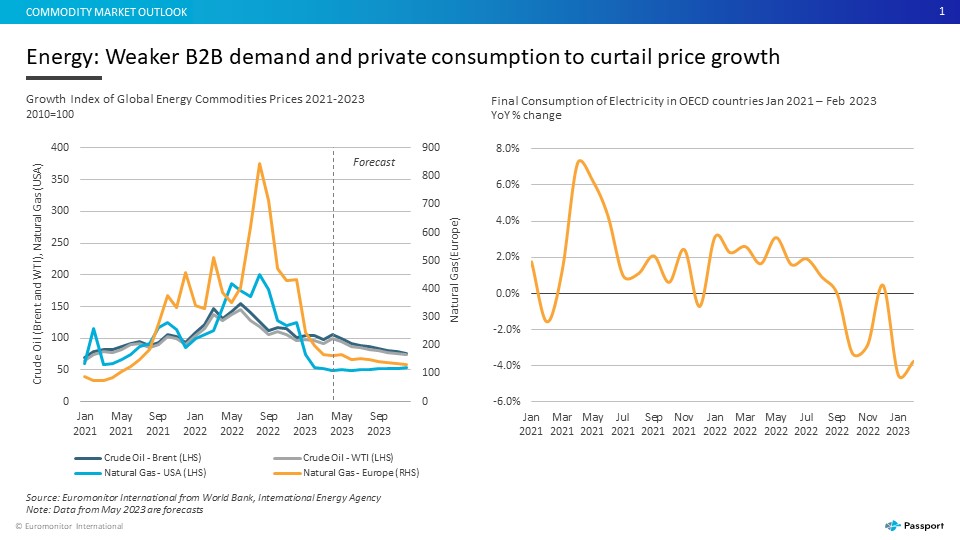
To understand the risk profile, it is necessary to compare the volatility of traditional energy commodities against green metals under these new forecasting regimes. The following comparison highlights how AI-driven models perceive risk differently across asset classes.
| Commodity | Primary Driver | Volatility Type | AI Forecast Sensitivity |
|---|---|---|---|
| Crude Oil | Geopolitical supply shocks | High, event-driven | Moderate |
| Uranium | Nuclear capacity expansion | Low baseline, high tail risk | High |
| Lithium | EV battery demand | Cyclical, capacity-driven | Very High |
| Copper | Grid infrastructure build-out | Structural deficit | High |
| Rare Earths | Tech supply chain constraints | Concentrated supply risk | Extreme |
Pricing models and risk management
The application of artificial intelligence in commodity trading has shifted from experimental back-office tools to core pricing engines. Legacy valuation models, often reliant on static historical data and linear assumptions, struggle to capture the non-linear volatility inherent in modern energy and agricultural markets. AI-driven systems now integrate real-time alternative data—such as satellite imagery of storage tanks, shipping traffic, and weather patterns—to adjust derivative pricing dynamically.
These models reduce the lag between market events and price discovery. By processing unstructured data at scale, algorithms can identify arbitrage opportunities and mispriced risks that human analysts might miss due to information overload. The result is a tighter bid-ask spread and more accurate margin requirements for complex derivatives like options and swaps.
Risk management has evolved in parallel. Counterparty risk, once assessed through periodic credit reviews, is now monitored continuously. AI systems simulate millions of market scenarios to predict potential defaults or liquidity crunches before they materialize. This proactive approach allows trading firms to hedge exposures more precisely, reducing the capital tied up in reserves.
The integration of these technologies is not merely about speed; it is about structural resilience. As commodity markets become increasingly fragmented and volatile, the ability to price risk accurately and manage counterparty exposure in real-time becomes a competitive necessity rather than a operational luxury. Firms that fail to adopt these AI-driven frameworks risk significant capital erosion during market dislocations.
Will AI take over commodity trading?
The short answer is no. While artificial intelligence is fundamentally reshaping the sector, it functions as a force multiplier for human traders rather than a replacement. As Oliver Wyman notes, AI will play an increasingly significant role in refining trading strategies and improving operational efficiency, but human oversight remains essential for complex decision-making.
The current consensus among industry leaders, including McKinsey, is that AI augments expertise. Traders are shifting from manual data crunching to strategic interpretation, relying on AI to process vast datasets while they manage risk and relationships. This collaboration allows firms to approach the threshold of a new era in commodity trading without losing the nuanced judgment that algorithms cannot replicate.
No comments yet. Be the first to share your thoughts!