
2026 commodity market outlook
The global commodity landscape is entering a phase of deliberate cooling. According to the World Bank, global commodity prices are projected to decline by approximately 7 percent in 2026. This marks the fourth consecutive year of moderation, signaling that the post-pandemic supply shocks and energy spikes have largely normalized. For investors, this broad-based pullback sets a cautious macroeconomic backdrop, but it masks a more complex reality beneath the surface.
While fuels and bulk industrial inputs face downward pressure, structural divergence is emerging in specific sectors. Base metals and green energy inputs are decoupling from the general trend. As Morgan Stanley notes, base metal prices are expected to remain broadly stable or rise modestly, driven by a firm demand base rather than speculative frenzy. This stability contrasts sharply with the volatility seen in energy markets, creating a bifurcated market environment where industrial necessity outweighs general economic sentiment.
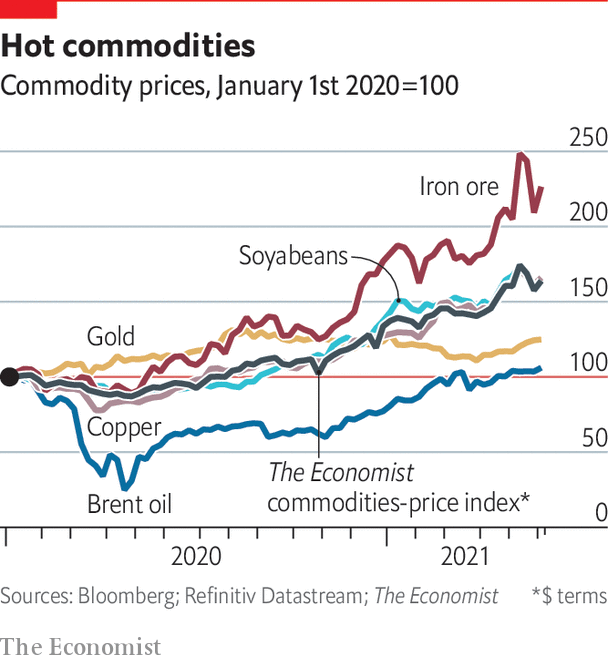
The CRB Index, a broad measure of commodity prices, illustrates this moderation. The chart below shows the recent trajectory of the index, reflecting the overall cooling trend while hinting at the underlying resilience in specific industrial segments.
This divergence is critical for understanding 2026 commodity trends. Investors cannot treat the commodity complex as a monolith. The decline in general prices does not imply a collapse in industrial activity; rather, it suggests a shift in cost structures. Energy efficiency gains and stabilized supply chains are reducing input costs for manufacturers, even as demand for copper, lithium, and rare earths remains structurally intact due to electrification mandates.
Copper supply shortage 2026
The copper market is entering a structural deficit that threatens to outpace the rapid expansion of electrification. While base metal prices have remained broadly stable or risen modestly in recent periods, the underlying mechanics of the mine supply chain are tightening significantly. Goldman Sachs and other major financial institutions have flagged this divergence, noting that the demand base for copper is firm while new supply projects face mounting delays. This gap is not merely cyclical; it reflects a decade of underinvestment in exploration and development that is now colliding with the physical requirements of the energy transition.
Mine output is struggling to keep pace with the dual engines of global industrial demand and green energy infrastructure. Copper is indispensable for electric vehicles, which use two to three times more copper than internal combustion engine cars, as well as for renewable energy grids and charging networks. Despite this, new mine projects are rare and capital-intensive, often taking over ten years from discovery to production. The result is a supply crunch where existing mines are aging and producing less, while new capacity is virtually nonexistent. This supply shortage 2026 scenario suggests that prices will remain volatile and elevated as buyers compete for a shrinking pool of available metal.
The implications for investors and industrial buyers are profound. A persistent deficit means that copper could act as a critical bottleneck for the global transition to clean energy. Companies relying on copper for manufacturing may face higher input costs and supply chain disruptions. Meanwhile, investors are increasingly viewing copper as a strategic asset, driving further demand in financial markets. The combination of physical scarcity and financial speculation creates a complex landscape where price discovery is driven as much by macroeconomic sentiment as by actual mine output. This dynamic underscores the need for careful risk management in any portfolio exposed to industrial metals.
Market Outlook and Price Dynamics
The outlook for copper in 2026 is characterized by optimism tempered by structural constraints. Morgan Stanley and other analysts highlight that while precious metals may offer leadership, copper remains a key sector with a potentially bright outlook due to its irreplaceable role in electrification. The supply-side challenges are expected to support higher prices, providing a tailwind for copper producers but posing inflationary risks for downstream industries. This environment favors companies with strong balance sheets and access to low-cost, long-life reserves.
Investors are closely monitoring technical indicators and market sentiment to gauge the extent of the deficit. The persistent supply shortage 2026 narrative is likely to keep copper in favor among commodity-focused funds, driving volume and volatility. However, the risk of a global economic slowdown cannot be ignored, as it could temporarily dampen industrial demand. Nevertheless, the long-term trend toward electrification provides a robust floor for copper prices, making it a critical component of any diversified commodity strategy.
Lithium price forecast 2026
The lithium market is entering a phase of stabilization after the steep corrections seen in 2024 and 2025. Following a period of oversupply driven by aggressive expansion in Australian and South American production, prices have found a floor as demand growth from electric vehicle (EV) manufacturers begins to outpace new supply additions. For 2026, the consensus among analysts points to a gradual recovery rather than a V-shaped rebound.
Fastmarkets and other primary commodity intelligence firms suggest that 2026 will be defined by efficiency gains rather than volume explosions. High-cost producers are expected to curtail output, tightening the market balance. This supply discipline, combined with steady EV adoption rates in China and Europe, should support a modest upward trend in lithium carbonate and spodumene prices.
Investors should monitor inventory levels at major smelters and the pace of new mine approvals in Africa and South America. A sustained price increase above $15,000 per tonne for lithium carbonate could trigger renewed investment in marginal projects, potentially capping the upside. However, near-term constraints and the strategic importance of battery metals likely keep the floor firm.
Rare earth elements investment
Rare earth elements (REEs) have moved from niche industrial inputs to central pillars of global security. In 2026, the investment thesis for REEs is no longer just about demand from electric vehicles or wind turbines; it is about supply chain resilience. The market is shifting away from single-source dependencies, particularly those concentrated in China, toward a more diversified global landscape.
This diversification is driving significant capital into alternative mining and processing projects. Investors are looking at assets in Australia, the United States, and Southeast Asia that can offer a reliable counterweight to dominant producers. The geopolitical risk premium is now a tangible factor in pricing, rewarding companies that can demonstrate secure, non-concentrated supply chains.
| Producer | Production Share | Export Restrictions |
|---|---|---|
| China | ~70% | Strict controls on tech transfer and export quotas |
| Australia | ~15% | Minimal restrictions; strong trade agreements |
| USA | ~12% | Limited export controls; focus on domestic processing |
The table above illustrates the current imbalance. While China maintains a dominant position, its recent tightening of export controls has accelerated investment in non-Chinese projects. This shift is not just about volume; it is about securing the critical minerals needed for defense and high-tech manufacturing. Companies that can navigate these geopolitical complexities while delivering consistent production are well-positioned for long-term growth.
Gold and silver ride dollar weakness
Gold and silver are positioning as critical portfolio anchors for 2026, driven by a shifting U.S. dollar and broader commodity optimism. As the greenback trends lower, precious metals historically gain traction, acting as both a hedge against currency depreciation and a beneficiary of renewed industrial demand. This dynamic creates a dual-support structure for prices that extends beyond simple safe-haven flows.
The relationship between the dollar and precious metals is inverse but not rigid. When the dollar weakens, it reduces the cost of buying gold and silver for holders of other currencies, expanding the buyer pool. Simultaneously, Morgan Stanley notes that precious metals are a key sector with a bright outlook, distinct from the volatility seen in fuels and base metals. This distinction allows investors to treat gold and silver as leadership areas rather than reactive hedges.
To visualize this correlation, we can look at the price action of gold against the dollar's trajectory. The chart below highlights how gold (GC1!) often climbs as dollar strength fades, confirming the trend observed in early 2026 market analysis.
Silver adds another layer of complexity to this dynamic. While it shares gold's monetary properties, silver is also an industrial metal, meaning its performance is tied to both dollar weakness and the broader commodity cycle. As base metal prices remain stable or rise modestly due to firm demand, silver benefits from this industrial tailwind while still riding the coattails of dollar depreciation. This dual nature makes it a unique component in a diversified 2026 commodity portfolio.
Key 2026 commodity trends
Base metal prices are expected to remain broadly stable or rise modestly, driven by a firm demand base in industrial inputs. This stability provides a predictable floor for investors tracking copper and lithium.
Beyond traditional fuels, precious metals like gold and silver are showing a potentially bright outlook. Their performance is increasingly tied to broader market optimism rather than just safe-haven flows.
No comments yet. Be the first to share your thoughts!