
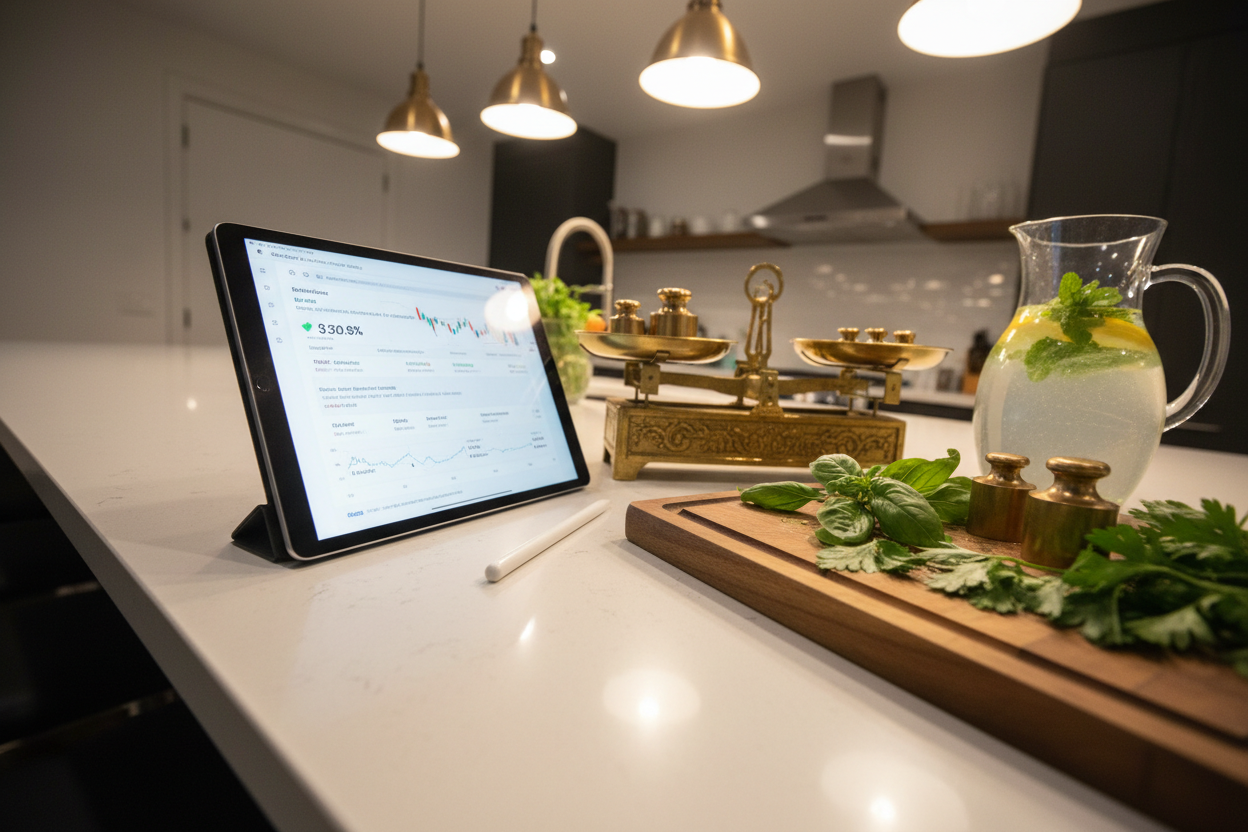
In the volatile world of crypto and commodities, tokenized physical gold stands out as a pragmatic bridge between timeless value and blockchain efficiency. With the tokenized gold market cap surging past $6 billion in 2026, investors are flocking to over-collateralized tokens backed by fractional reserves, such as 1/1000 oz allocations. PAX Gold (PAXG), trading at $5,013.05 after a 24-hour dip of $3.19, exemplifies this trend, offering direct exposure to physical bullion without the hassles of storage or transport.
Understanding Over-Collateralized Gold Tokens and Their 1/1000 oz Backing
Tokenized physical gold transforms bars in vaults into digital tokens on the blockchain, but the real innovation lies in over-collateralization. Unlike standard 1: 1 pegs, these tokens maintain reserves exceeding circulating supply, often verified via Proof of Reserve protocols. Take MiloGold ($MLGD), where each token represents 1/1,000,000 oz of gold, but the system ensures reserves far surpass token issuance for added security. This fractional gold blockchain approach, scaling to 1/1000 oz equivalents in pooled structures, minimizes counterparty risk while enabling micro-investments in RWA gold investment.
The process starts with custodians allocating physical gold, typically London Good Delivery bars, into audited vaults. Blockchain smart contracts then mint tokens proportionally, with over-collateralization ratios like 110-150% providing a buffer against price swings or redemption rushes. Tether's XAUt, for instance, minted $946 million in early 2026, backed 1: 1 by troy ounces in Swiss vaults, but emerging protocols layer extra reserves for institutional trust. This setup delivers tokenized physical gold that's redeemable, divisible, and composable in DeFi.
Market Momentum: From $4 Billion to a $6 Billion Powerhouse
Adoption exploded in late 2025, with market cap tripling from $1.3 billion to over $4 billion by December, now blasting beyond $6 billion amid risk-off sentiment. PAXG's resilience at $5,013.05, despite a 24-hour low of $4,966.84, underscores gold's safe-haven appeal in crypto portfolios. Projects like Goldfish are prepping governance tokens for their over-collateralized platform, while Serenity Labs' dual-tokenization fuses physical controls with on-chain verification.
Tokenized gold and silver have taken over as the hottest trades of 2026.
Driving this? DeFi integration lets holders use tokens as collateral for yields, outpacing ETFs in liquidity. The world's first tokenized gold public company just unveiled Duncan, an AI trader executing strategies on Tether Gold, signaling automated institutional inflows. Top tokens like XAUT, PAXG, and KAU dominate rankings, with crypto natives capitalizing on on-chain precious metals.
Advantages of 1/1000 oz Fractional Reserves in Blockchain Gold
Over-collateralized gold tokens backed by 1/1000 oz reserves democratize access, letting retail investors buy slivers of gold impossible with physical bars. At current prices, PAXG's $5,013.05 per token equates to one ounce, but fractional protocols slice it finer, enhancing portfolio precision. Transparency reigns: real-time audits via blockchain explorers confirm reserves, slashing trust dependencies plaguing traditional gold markets.
Consider liquidity: trade 24/7 on DEXs without spreads or settlement delays. In DeFi, stake for yields or borrow against holdings, turning inert metal into productive capital. Yet, risks persist; sovereign controls and issuer reliance demand scrutiny. My view? Prioritize protocols with independent audits and high over-collateralization- they protect capital amid volatility. For deeper mechanics, explore how tokenized gold ensures blockchain transparency.
PAX Gold (PAXG) Price Prediction 2027-2032
Forecasts amid tokenized gold market explosion past $6B cap, DeFi integration, and institutional adoption (Current 2026 price: $5,013.05)
| Year | Minimum Price | Average Price | Maximum Price | YoY % Change (Avg) |
|---|---|---|---|---|
| 2027 | $4,800 | $5,300 | $6,000 | +5.7% |
| 2028 | $5,100 | $5,800 | $6,700 | +9.4% |
| 2029 | $5,600 | $6,500 | $7,500 | +12.1% |
| 2030 | $6,300 | $7,300 | $8,400 | +12.3% |
| 2031 | $7,100 | $8,200 | $9,400 | +12.3% |
| 2032 | $7,900 | $9,200 | $10,600 | +12.2% |
Price Prediction Summary
PAXG is poised for strong upward trajectory from 2027-2032, with average prices rising from $5,300 to $9,200 (CAGR ~11.7%), fueled by tokenized gold's market surge, DeFi yield opportunities, AI trading innovations, and gold's safe-haven status. Min/max ranges account for bearish corrections and bullish adoption peaks.
Key Factors Affecting PAX Gold Price
- Tokenized gold market cap exceeding $6B with rapid adoption
- DeFi integration for collateral, yield farming, and superior liquidity
- Institutional tools like AI traders (e.g., Duncan for Tether Gold)
- Over-collateralization and Proof-of-Reserves enhancing trust
- Regulatory tailwinds for RWA tokenization
- Gold price appreciation amid inflation and risk-off sentiment
- Competition from XAUT, MiloGold spurring innovation
- Broader crypto bull cycles and RWA sector growth
Disclaimer: Cryptocurrency price predictions are speculative and based on current market analysis. Actual prices may vary significantly due to market volatility, regulatory changes, and other factors. Always do your own research before making investment decisions.
Institutions eye this space too, with Goldfish's institutional-grade over-collateralization drawing yield-hungry funds. As risk-off flows intensify, these tokens offer uncorrelated returns, hedging crypto drawdowns effectively.
That said, not all shine equally. Sovereign control remains a thorn, as most issuers operate under private governance on public chains. Protocols like those from Goldfish and MiloGold counter this with rigorous Proof of Reserve and over-collateralization, but investors must vet custodians rigorously. Physical gold's allure persists at $5,013.05 per PAXG ounce-equivalent, yet blockchain wrappers introduce smart contract vulnerabilities and regulatory gray zones.
DeFi Synergies: Turning Gold into Yield-Bearing Collateral
Where tokenized physical gold truly disrupts is in DeFi composability. Over-collateralized tokens backed by 1/1000 oz reserves slot seamlessly into lending protocols, liquidity pools, and yield farms. Picture depositing fractional gold blockchain assets into Aave or Compound: earn APYs while retaining upside exposure. This beats stagnant ETFs, where liquidity evaporates after hours. Tether's XAUt, with its $946 million mint in early 2026, already powers automated strategies via Duncan, the AI trader from the first public tokenized gold firm.
Yield generation aside, these RWA gold investments enable sophisticated hedging. In crypto winters, collateralize PAXG at $5,013.05 to borrow stables, avoiding liquidation through conservative loan-to-value ratios. Serenity Labs' dual-token model adds compliance layers, blending physical audits with on-chain proofs for institutional buy-in. My take: this fusion protects capital by design, pursuing opportunity in bull markets via leveraged longs.
Key Players Dominating the Over-Collateralized Space
XAUT and PAXG lead by market cap, but niche players innovate. MiloGold's ultra-fractional 1/1,000,000 oz per token scales to 1/1000 oz pools with 150% and collateral buffers. Goldfish targets institutions with verified reserves, prepping GFIN for decentralized governance. KAU rounds out top ranks, each audited for transparency. These aren't gimmicks; they're battle-tested amid 24-hour PAXG swings from $4,966.84 to $5,026.33.
Top 5 Over-Collateralized Gold Tokens
- PAXG ($5,013.05, 1 oz): Pax Gold token backed 1:1 by physical gold, providing blockchain-verified ownership, liquidity, and transparency as a digital store of value.

- XAUT (Tether-backed): Tether Gold, 1:1 redeemable for one troy ounce of gold in Swiss vaults. Minted ~$946M in early 2026 amid rising demand for on-chain gold.

- MiloGold ($MLGD) (1/1M oz): Fractional token representing 1/1,000,000 oz gold per token, using Proof of Reserve for over-collateralization and transparency.

- Goldfish (institutional): Institutional-grade platform offering verified, over-collateralized physical gold on-chain, preparing GFIN governance token launch.

- KAU (high reserves): Tokenized gold with high reserve backing, featured among top gold-backed cryptos for reliability and market presence.

Trading these demands discipline. Monitor reserves via explorers, diversify issuers, and pair with technicals. PAXG's dip of $3.19 reflects broader sentiment, yet gold's fundamentals- supply constraints, central bank buying- support resilience. For hands-on entry, platforms integrate DEXs with wallets, fractional buys starting under $10.
Risk management anchors my approach: allocate 5-15% portfolio to tokenized physical gold, rebalance quarterly. Over-collateralization mitigates defaults, but pair with on-chain analytics. As 2026 unfolds, expect ETF challengers and CBDC pilots to accelerate adoption, cementing fractional gold blockchain as portfolio bedrock. Forward-thinkers stacking these today navigate volatility with conviction, blending tradition's ballast and blockchain's velocity.
Tokenized gold market cap beyond $6 billion signals a powerful new phase.
No comments yet. Be the first to share your thoughts!